FUTURE OF ENERGY
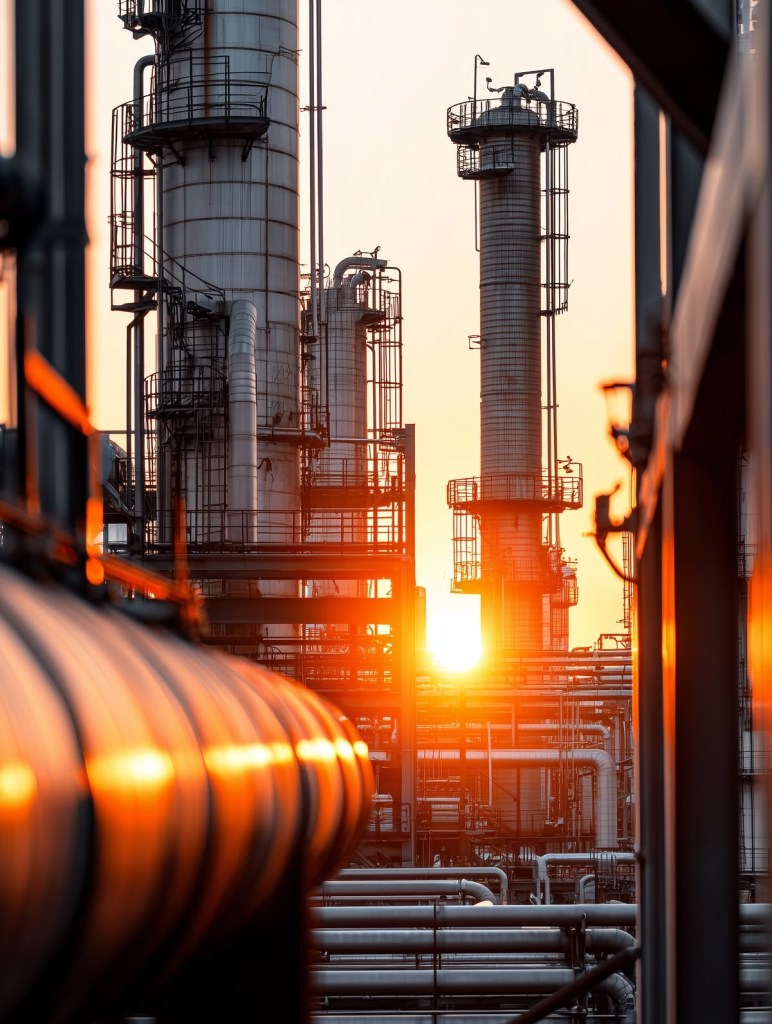
Authors are invited to select one of the thematic subsections below and submit their research in accordance with the journal’s submission requirements. Each subsection focuses on current scientific and technological challenges, providing a platform for researchers to present their achievements in a specific field and contribute to interdisciplinary scientific dialogue.
Covers geology, geophysics, drilling, field development, pipeline transportation, and the design of production facilities and infrastructure.
Covers synthesis, purification and separation processes, catalysis, quality control, and innovative chemical manufacturing technologies.
Covers solar, wind, hydrogen, and geothermal energy, energy storage systems, carbon footprint reduction technologies, and ESG initiatives.
Covers automation, artificial intelligence (AI), Big Data, the Industrial Internet of Things (IIoT), SCADA systems, digital twins, and digital design technologies (CAD, BIM, etc.).
Covers financial modeling, energy auditing, tariff regulation, investment strategies, risk management, and the digital economy.
Covers novel designs, devices, and equipment, as well as the engineering and development of technical solutions for the energy, chemical, and manufacturing industries.
CHEMISTRY, MATERIALS, AND TECHNOLOGIES
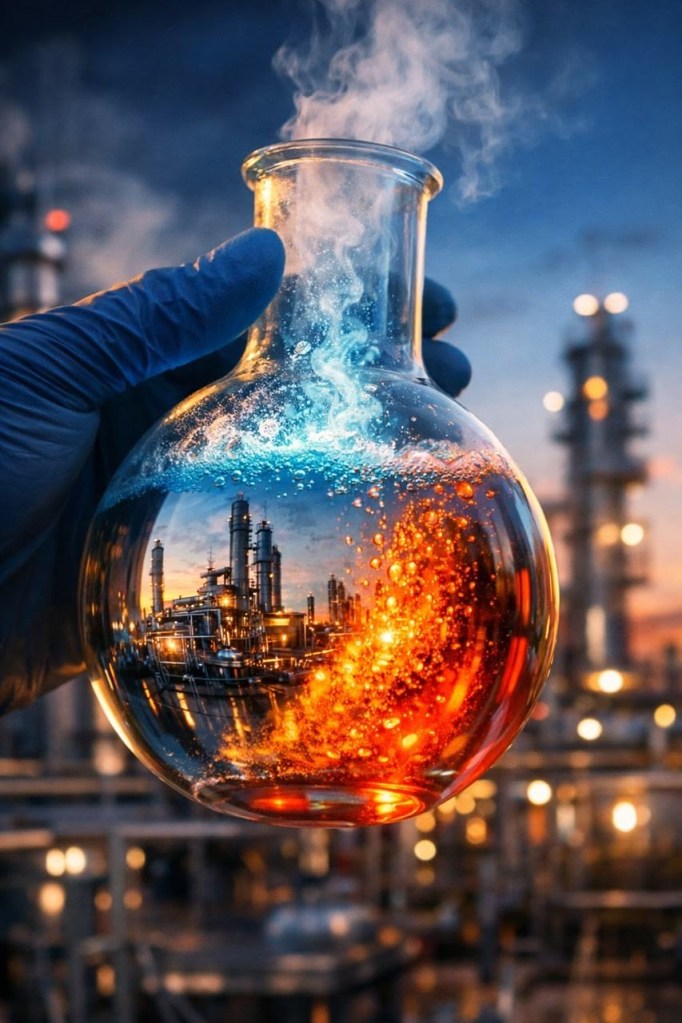
This section welcomes manuscripts presenting fundamental and applied research in the fields of organic, inorganic, physical, analytical, and environmental chemistry, as well as chemical engineering. Particular emphasis is placed on innovative raw material processing technologies, the development of advanced materials, analytical methods, and sustainable chemical processes. Submitted manuscripts should demonstrate scientific novelty and practical significance.
Research on fundamental processes, the structure and properties of inorganic compounds, catalysis, and chemical reactivity.
Covers the synthesis and modification of organic compounds, hydrocarbon processing, polymeric materials, and composite materials.
Covers the interactions of substances in heterogeneous systems, thermodynamics, chemical kinetics, and phase transitions.
Covers the modeling, optimization, and development of chemical production processes, chemical reactors, mass transfer, and energy-efficient process technologies.
Covers high-temperature, membrane, nanostructured, and composite materials for applications in energy, mechanical engineering, and environmental protection.
Covers sustainable technologies, closed-loop production systems, recycling, and pollution control.
Covers modern analytical methods, including spectroscopy, chromatography, mass spectrometry, and sensor technologies.
ECOLOGY AND SUSTAINABLE DEVELOPMENT

This section welcomes manuscripts addressing environmental protection, sustainable use of natural resources, climate change, decarbonization, ESG approaches, and the circular economy. Particular emphasis is placed on scientific research and practical solutions in industrial and environmental safety, resource management, and the sustainable development of regions.
Efficient use of natural resources and minimization of the environmental impact of industrial activities.
Monitoring systems for air, water, soil, and ecosystem conditions.
Risk management for industrial accidents and emissions, as well as technologies for emergency prevention.
Climate change, carbon footprint assessment, and carbon capture, utilization, and storage (CCUS) technologies.
ESG approaches, environmental regulation, and green finance.
Waste-to-Energy technologies, recycling, resource recovery and reuse, and zero-waste solutions.
Research on biodiversity, ecosystem functions, and their integration into industrial planning.
INFORMATION TECHNOLOGIES AND DIGITALIZATION
This section welcomes articles on industrial digitalization, the development and application of artificial intelligence, automation systems, digital twins, the Industrial Internet of Things (IIoT), Big Data, and cybersecurity. Special emphasis is placed on applied IT solutions for the energy, environmental, and chemical industries, as well as the integration of digital technologies into industrial process management and infrastructure.

Development of virtual models of technological systems for process optimization and performance forecasting.
Analytics, predictive maintenance, diagnostics, and optimization of industrial processes.
Connected sensors, real-time monitoring, and integration of industrial devices.
Process automation, production chain monitoring, and integration of industrial operations.
Fundamental and applied mathematics as the foundation for the analysis, modeling, and optimization of engineering and technological processes.
Protection of critical infrastructure, industrial networks, and data.
Large-scale data processing systems, forecasting, and decision support.
Development of enterprise platforms, digital libraries, knowledge bases, and engineering solutions.
STARTUPS AND INNOVATIVE SOLUTIONS

This section is dedicated to emerging technological ideas, projects, and developments at the early or active implementation stage. We welcome contributions from researchers, innovators, startups, engineering teams, and companies working at the intersection of science, engineering, and entrepreneurship.
The section may include:
- descriptions of startups and innovative platforms;
- technical concepts with commercialization potential;
- case studies on the implementation of innovative solutions;
- initiatives seeking strategic partners or investors.
The goal of this section is to provide an open platform for promoting advanced ideas that can drive industrial development and shape the technological landscape of the region.
 Energy ELEMENTS